

EQ mixing is a cornerstone of solid DJing, a great tool that can add the final polish to a great DJ set. Learning the fundamentals behind equalization is a critical step in becoming an advanced DJ, so today we’re taking a closer look at the theory and techniques that make EQing one of the most important technical and creative skills in the DJ craft.  Continue on and we’ll take a closer look at those knobs…

We’ve touched on mixing EQ and different types of EQ before here at DJTT – our recent article on isolators was not only very popular but an excellent introduction to the technical side of frequency isolation, and our article on the difference between filters and EQ is another popular reading point. Today we’re going to look into EQ a little more specifically, dipping our toe into the theory behind how it works, and look at the most common techniques used in EQ mixing.

SOUND BASICS
Sound is a term that we give to waves that oscillate at a rate that our ears can pick up and we decode.

Pitch is an effect of wave frequency. We don’t perceive all pitches to be the same volume, even if physically speaking they are. Consider white noise – The amplitude of all frequencies in white noise is equal, yet white noise sounds quite high-pitched.

We give more precedence to higher pitched noises when we hear them, and this is one of the main reason you have to use your ears when EQing tracks.

FREQUENCY
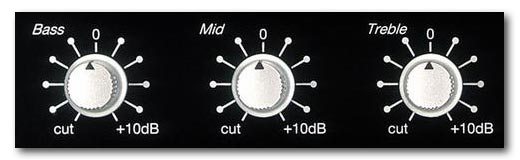
Most DJs have a basic idea of what ‘high’, ‘mid’ and ‘low’ mean for frequencies, and experimenting with your mixer/software will show you what they mean for your hardware and software.

Differences in character aside, the width of the bands will be more or less the same with different brands- but the power of the cut and boost for each band varies quite considerably between different brands.

An EQ with a ‘full kill’ will attenuate the EQ band until it’s silent, whereas a ‘shaping’ EQ will attenuate the frequencies without completely silencing them.  Full kill EQ is becoming the norm, and some top flight mixers, such as Pioneer and Allen & Heath’s latest efforts, allow you to choose the EQ model for a personal sound.

FUNDAMENTAL UNDERSTANDING

We’ve established that sounds are based around frequency and amplitude; why don’t two different instruments playing at the same volume and pitch sound exactly the same, and why can’t we simply cut out a specific instrument from a track?

The answer is down to a sound’s harmonic content. We hear sounds based on their fundamental frequency and their harmonic frequency, and for every sound playing at, for instance, middle C on the keyboard, there are harmonics of that middle C that are also triggered and are picked up by our ear in a giant mix. This is why nothing is as simple as ‘cutting the horns out’ of a track. A fairly pure bass sound will not carry very far into the higher frequency spectrum, but the character of a lot of melodic instruments is contained across the entire frequency spectrum.

EQ Knobs: Not Magical Mashup Makers

When using EQ, it’s important to remember that principles of harmonic mixing still apply. If two songs are in different keys, simply substituting the bass of one for the bass may still result in a clash of harmonics.

EQ isn’t a magic set of dials that can turn your tracks into acapellas or pull out some Motown horns to drop over your latest dubstep banger, so we need to look at practical applications and techniques. Volume is the great determiner when it comes to EQ. When mixing two audio sources, the end result is louder than mixing just one – so EQ is a great way to balance each source and make room for both songs to live together.

Three Critical EQ Techniques for DJs:

As mentioned at the beginning of this article, successful EQ depends on both creative and technical use, two situations for using EQ that we can separate into different techniques.

  • Full Frequency Mix: As we covered in techniques, the frequencies of the instruments are spread across the range. Therefore many DJs EQ only to balance out songs and then mix using volume faders alone. EQ swapping or full EQ cuts are avoided at all costs.  This “full frequency” mixing is popular amongst house DJs where long mixing and gentle volume balancing is required.
  • EQ Blend: If track A is an instrumental track with harsh, attention-grabbing riffs in the mid range of the frequency spectrum and track B is a vocal track dominated by a vocalist’s performance, mixing the two together will result in an overcrowded midrange. To hear the vocals as we play the two tracks together, reduce the midrange of track A, giving the vocal in track B room to breathe in the mix. Cutting too much out of the mids in track A will create an odd effect because so much of the harmonic content that feeds through from the low and high ends of the spectrum will be lost, so carefully dial in just enough cut in track A to allow space for the vocal and pave the way for a more pleasant mix.
  • Swapping Basslines is a time-honored DJ technique. As mentioned, we tend to hear bass as comparatively quiet compared to higher frequencies. In order to counter the effects of this, cut out as much low end as possible from track A to make room for the bass in track B to mix in. Due to the fact that the bass takes up so much of the track’s overall energy, often there’s very little adjustment of track B’s mid and high range needed to keep the levels of the mixed output acceptable.
  • Tone Matching is an important technique that many DJs who didn’t start out by mixing vinyl will often neglect. Because digital tracks usually are delivered in a relatively similar EQ range, there’s often very little that needs to be done to make sure that your latest finds from this month’s Beatport techno section sit well together. But if you start adding in different genres and eras of music to the mix you might find things get a bit more disparate. Using EQ is a way to create smoother transitions from track to track; by literally equalizing the songs. Cut out the mids out of older tracks to allow for more gain in the overall signal, or perhaps boost high frequencies on vinyl (or vinyl rips), where the medium itself is limited in the higher frequency information it can contain.

FINAL WORD

When using EQ, the final word is to use your ears. If the tracks you play sound right together, then they often are  (read our article here to get the real low-down on levels) so trust your instincts and adjust the sound to each room and situation.



  • Usedtoloveyou

    This article reads like the instruction manual from the Gemini “DJ in a box” – GAG

    I also find myself saying  “No sh*t Sherlock” in my head every other sentence.

    and the pic of skrillex tops off my dick going completely limp, like this article.

  • http://www.facebook.com/per.jakobsen Per Jakobsen

    House music.. well I tend to cut my lows with house music

  • DJJB

    If you don’t need the advice don’t bother reading it. Yes, to a lot of us basic EQ theory is pretty obvious, but DJTT caters to Controllerists of all abilities and levels. If you already know what you’re reading go somewhere else. There’s no need to be a dick about it

  • gmax

     And a limp dick at that..

  • Bcondemi

     The article is great, especially to those who don’t know. Not necessary to knock the article just because you know how to use your EQ.

    BC

  • http://twitter.com/jamespieaterson James Pieaterson

    Dont forget that this site is catering for newbies as well as established DJs, so the articles aren’t for everyone.

  • http://twitter.com/WooDzMuzik Anthony Woodruffe

    When I made a bit of constructive criticism on a DJTT post a few weeks back I got ripped to shreds. I certainly was not as insulting as ‘Usedtoloveyou’ I’ve been mixing and producing music for over 25years and found this post informative.
    A good read… thanks DJTT

  • http://pulse.yahoo.com/_WL7IQEHEOBFGGQE4RUXOB45ZKE Gonzo

    All novice DJs need to go back and re-read that first paragraph…a few times. 

    Funny, I was at a bar on Friday and the sound from the booth was extremely harsh. I went over to the guy (as I always do). Serato, SL-1200 MK2s, TTM-57SL… that can’t be it. The JBL PA has always been rock solid at this joint so that can’t be it.

    His EQ was crap. Mids were docked, lows were all over the place, highs were too high, levels were way too hot. He was very new to DJ’ing and his downfall was that he was USING HIS UNTRAINED EARS, TRUSTING HIS SHALLOW INSTINCTS. He didn’t know how to adjust the sound for the room.

    It’s great that the site continues to publish articles as a result of that survey we all took. There are novice DJs out there who want this info and they are coming to this site to find it. Not all DJs have the ear to fall back on at first. DJTT crew, perhaps videos from the lab demonstrating these techniques would be nice. If you’ve already shot those, maybe link back to them. Video content should be paramount in the blogosphere anyway–and I always admire the shooting and editing on your lab videos.  

  • http://pulse.yahoo.com/_WL7IQEHEOBFGGQE4RUXOB45ZKE Gonzo

    Thanks for the contribution. Your insight and expertise is a huge addition to this blog. It must be tough to read and comment on articles in the short amount of time you have between Jesus poses in front of 100,000 people.

  • Ryan Supak

    It’s usually better to cut EQ than boost. Add gain to the channel if the volume isn’t loud enough.

    (Anybody here write DSP for the Pioneer DJM series? I know the channel EQ was modeled after a Harrison board, but is it modeled as a passive EQ as well?)

    rs

  • http://www.facebook.com/xdubbaxbubbax Stephen Dub Bub Almada

    this should be the no. 1 thing running through a DJ’s head. eq and levels.
    too many crap dj’s out there thinking that the eq’s are volumes for each freq band.

    this is a good read for the new kids on the block dj’s…..but if you have been spinning for a few years and have not figured this “trick” out….then sell those belt drivin TT’s

  • Rukks

    Love the skrillex reference to the beat repeat.

  • http://www.reverbnation.com/lewislace Lewislace

    Mix all the way up the B scale running songs around 120 bpm then mix with G# as the relative minor half tempo at 60 bpm or maybe combing songs to immolate the B scale in first inversion to build tension taking the tempo up to 125 to 128 bpm. 

  • http://twitter.com/arsvith Andrew Cizek

    Zing

  • Farko

    Nice
    article that beginners should really pay attention to. I’m all for DJing being
    made more accessible through new technology, but if people want to do it
    properly then they really need an understanding of these fundamental skills!

    One thing
    i didn’t quite understand was the section on ‘full frequency mixing’… More
    specifically the part about DJs only using ‘EQ only to balance out songs and
    then mix using volume faders alone’

    Can anyone
    please explain what exactly this means? I mix using a combination of 2 of the
    other techniques & don’t quite understand exactly what you’d be doing on
    the mixer to be ‘full frequency’ mixing?

  • http://twitter.com/arsvith Andrew Cizek

    I’m pretty disappointed a the lack of video back-up demonstrations for a lot of these tutorials.  It seems like all they break out the camera for these days are advertisements for their (admittedly [usually] exceptional) products.

  • http://twitter.com/arsvith Andrew Cizek

    YOUR JARGON IMPRESSES NOBODY.  BEGONE

  • http://twitter.com/arsvith Andrew Cizek

    To be fair, the EQ’s /essentially/ are volumes for the frequency bands.  That being said, nothing makes me want to slap someone upside the face more than seeing all the EQs turned all the way up.  Except possibly having all of them but one turned up.

  • DJTL

    Full frequency mixing means that you only use the EQ to make each track sound perfect on its own. When it is time to mix you don’t cut out any frequencies or touch the EQs at all, you simply mix using only the volume faders.

  • fuzzybutt

    Why was Skrillex’s photo in this article? Any guesses anyone?

  • Shwooooosh!

    “(…) the B scale in first inversion (…)”. A major scale is a major scale; you can’t invert it–unless it’s a mode you’re referring to. 

  • Usedtoloveyou

    skrillex will do that to ya… what can i say…

  • hotmouth

    I have pretty much used full frequency mixing.
    but when doing harsh effects and scratch technique cuts using vocals I tend to give more high range to the track with effects and more low boost to the beats. In a way making my own track.

    Also with full frequency or even when pulling in a sound from a track I use a filter to bring in the sound regardless of the eq settings. depending on the type of filter this can be done quite smoothly without making any overwhelming noise to the sound.

  • Anonymous

    perfect for new dj’s :D

  • Philosurfer

    Another anonymous hater. It must be so frustrating for the DJTT crew to know that a good portion of their readers are straight douchebags. I’ve said it before: if you can do better go and create your own world class dj blog rather than giving your pointless .02 cents in the comments.
    Great article Chris- love the theory of sound stuff!

  • http://pulse.yahoo.com/_WL7IQEHEOBFGGQE4RUXOB45ZKE Gonzo

    immolate means to sacrifice by burning. either you’ve confused this with some other theory jargon or you’ve just invented a DJ buzzword for how to kill another song in an incendiary manner.

  • Djamesburke

    its just a reference to mash ups thats why stevie wonder is also in the same pic as in “a skrillex and stevie mash up”.

  • http://twitter.com/DJmeloVIBES Matt Melo

    The more articles there are like this, the stronger the DJ community. Some DJs are quick to bash another DJ… But what happened when THEY started out? I’m glad there is a solid platform for DJs who are starting out or just want to get better to learn some information from. 

  • http://goo.gl/8kRv5 galajurken online

    The article is very interesting, I love it.Hope to be able to see such a wonderful thing.

  • Mr. V

    Article is great for the “JUST STARTED DJING” workers, for those who know sound and bottom line “COMMON SENSE” the article is weak, but props for taking the time to write up about EQ mixing as I would not have.

    Secondly, Skillrex & Stevie Wonder SHOULD NEVER EVER EVER BE MENTIONED TOGETHER let alone mashed-up.
    2 seperate worlds and 1 of them is incredibly talented and a legend and we all know that ain’t Skillrex [No disrespect to Skillrex].

    Mr. V

  • fuzzybutt

    oh ok. thanks.

  • http://www.facebook.com/profile.php?id=1137292039 Ronald Edwards

    Not every article can be a winner… I think what people were looking for was a little more meat to the article. The Techniques section left me feeling like it was justifying why a person would want to raise or lower a section of the full spectrum of bandwidth but not explaining how to know when to use it. Often-times, it’s difficult to take yourself back to the place you were BEFORE you learned why you do something a particular way. This is my take on EQs…

    EQs are (based off of) variable resistors which effect the sound spectrum. Turning a knob to the left reduces the presence of that range of frequencies (and turning it to the right increases the presence). Unlike Volume Control knobs, EQs neutral starting position should be in the 12 o’clock position so that you can ‘dial up’ (clockwise) and ‘dial down’ (counter-clockwise) parts of the frequencies to suit your needs.

    The EQs should be used;
    1) to balance the way the sound is heard. No two rooms will sound the same because the shape and material of the room, the number of people in the room, the humidity and any other sounds that conflict with the tune are always different.
    2) to emphasize a range of sounds by either enhancing (or reducing) them, like a singer in a choir or to reduce played sounds… mainly as a technique. ‘Kills’ (a switched removal of that range of sounds) do this very well.
    3) to turn up (or down) sections of the song so that transitions don’t stand out such as having instruments being much louder than the previous track or (as stated above) to replace the beat of one song with another (which is a great transition technique).
    4) to reduce damage to equipment from distortion (hopefully to zero) while music is still being played at high volume.

    EQs are different than Filters in that a Filter controls a relatively wide ‘band’ of frequencies at the same time. Dialing right (clockwise) progressively cuts out the low-end, the mids and the high-ends and emphasizes the high end (eventually squashing into a very high range), and dialing to the left (counter-clockwise) operates the opposite way (which sounds like you’re listening to the music with a head cold). EQs handle only their rage of frequencies and will (almost) never act like a filter.

    I recommend playing with a loop of some sort (that covers the full spectrum) and dialing the knobs up and down to get a feel for what they sound like when you change their values.

    Chris is right though, you have to use your ears to figure out what sounds right. I very much suggest getting some level of training so that you understand how to do this correctly.

  • Evolakim

    This was the first thing I figured out when I was about 13, but I read it anyway. Always nice to share knowledge. Also, Skrillex is pretty good. I know the cool thing to do these days is to hate on SKrillex, but I think dude’s got skills.’
    Anyway, keep up the good work. DJTT

  • http://twitter.com/djmjtn Michael Jones

    Great article! I remember when I first started DJ ing I had no idea about cutting the low end for the first month or so. Once I discovered  this golden truth, mixing the vinyls started blending instead of colliding.

  • vivian Green

     
    This article reads like the instruction manual from the Gemini “DJ in a box” – GAG

    I also find myself saying  “No sh*t Sherlock” in my head every other sentence.

    and the pic of skrillex tops off my dick going completely limp, like this article.

    5 toe shoes sale

  • dj techron

    what a douche bag.

  • Farko

    Cheers dude!

  • http://www.facebook.com/chrismjennings Chris Jennings

    I love my EQ’s!!

  • http://www.facebook.com/DJTEEOH Shuriken Tenshii

    Valuable article. Another one to pass to the aspiring djs i know. And out here in Japan, thats most of them. lol

  • Awesomer

    So is this a new spammer technique? Respond on topic and THEN include a random spam link to an e-commerce site?

  • http://www.facebook.com/profile.php?id=100002215379136 John Garza

    I feel proud that I already caught on to this. I started november 2011 and I’m 15 so fairly new here. I think I’m doing pretty good so far (Mainly thanks to you guys and playing on traktor since november)

  • Chiebs

    there’s no jargon there you fuck face.  Lewislace is just explaining how to make creative transitions.  I’ve been learning how to dj for 3 months now and what Lewislace explained here is one of the first things that i really got excited about.  I explained it to a friend and he was like “yeah I think dubstep does a lot of that shit”

  • Chiebs

    I’ll try to interpret what Lewislace said without the “jargon” for all you fuck faces (a face that a fag wants to just fuck cause he knows that face don’t have a brain)

    Take a happy song and mix it with the relative sad song at half the tempo.  Or combine the two and increase the tempo to 125 or 128 to build tensionMy personal thoughts: the more harsh the transition the more fun you’ll have (dodging bottles is fun as fuck!) 

  • Chiebs


    EQ isn’t a magic set of dials that can turn your tracks into acapellas or pull out some Motown horns to drop over your latest dubstep banger, so we need to look at practical applications and techniques”

    I think these “magic set of dials” you talk about are quickly becoming less and less magical.  I feel (not think and not based on any facts which I know djtt hates but whateve i do what i want) djs are going to move from mixing 2-4 tracks and creating 1 awesome track (maybe whith samples or other new forms of technology so that that these magic set of dials will soon come into play and let us do things like swap tiny waynes voice with some motown horns) 

  • Camroberts

    Great Article, I am also a fan of the traditional cut-the-low EQ technique. I also like to use the low frequency to accentuate a drop once in a while.  Using the high frequency is rare for me unless I as creating a wah noise to help enhance a build up. I agree with the mid-decrease for old-school tracks in order to boost the gain properly.  

  • Wink Wink

    Americans love these extraneous moral questions. FFS, can’t you discuss something meaningful for once? The ethics of the death penalty comes to mind.

  • http://www.miamitechnocentral.com/mixing-techniques-theory-tech-tools.htm EQ Mixing: Techniques & Theory by DJ Tech Tools :: MedellinStyle.com

    [...] Here is an article I find quite interesting by DJ TECH TOOLS for all dj’s who are learning and for others who are already in the scene doing their thing. Mixing a track can be easy for everone who knows, but you also have to make sure that your EQ’s are in the right spot and the right moment to make the mixing transition perfect. Check out the article… [...]

  • http://www.grooveschool.co.uk/?p=1333 GrooveSchool – EQ Mixing

    [...] EQ Mixing: Critical Techniques and Theory [...]

First Time?

This site is dedicated to digital DJs. We develop performance tools and teach cutting edge techniques that enable creative expression. Visit tutorial videos on youtube, equipment reviews in the blog and a very helpful community in the forum. New articles every Mon, Wed, Fri.

RSS DJ TechTools Forums

Review: Hot Hand USB Wireless MIDI Controller

When it comes to MIDI controllers, physical motion can be a hard type of input to understand and access - especially when it's completely disconnected from a physical controller. What if there was a controller that simplified motion - not quite as complex as Read More...