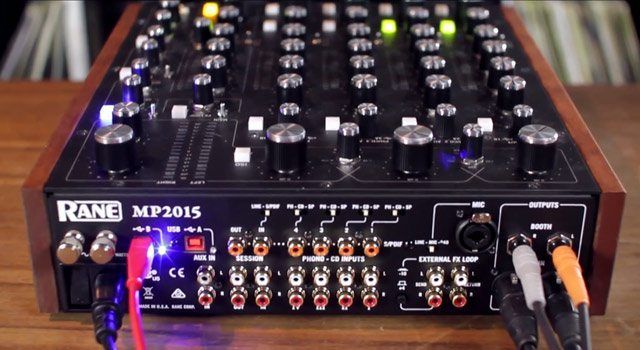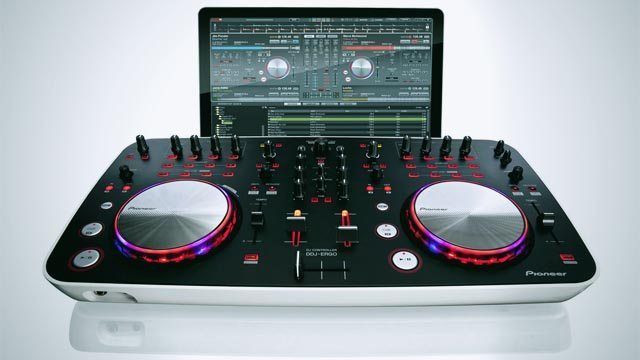
In a natural followup to last week’s article comparing filters and EQs, it’s time to take a closer look at the powerful audio devices known as isolators. In today’s article, we take a look at what a DJ isolator is, how they came to be, how to mix with them, and who the modern auteurs of isolator mixing are. Read on!

WHAT IS AN ISOLATOR?
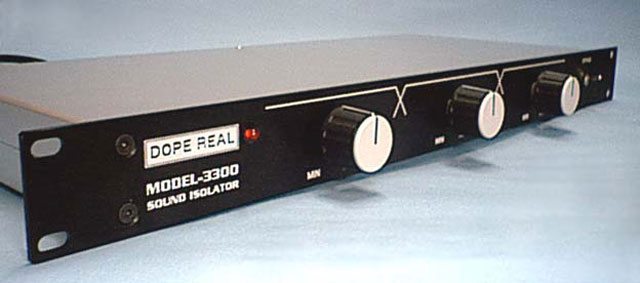
In basic terms, an isolator is a high quality, standalone DJ EQ with large knobs that’s attached to the master out. In contrast to traditional EQs, they are generally not used for the purposes of mixing, but instead to shape the sound and add color to your set. Isolators also feature wider frequency ranges, smoother pots, high quality amplification circuits, and much more gain per band (sometimes double).

In understanding how isolators work, it’s important to look back at the history of DJ technology. Isolators (and DJ EQs) come to us by way of their predecessor, the active crossover. Popularized by Richard Long Associates in the 1970’s, this device was a monumental leap forward. Brought about by new advances in discotheque sound systems, the active crossover allowed the DJ to split their mixer’s signal into bands by sending it through an op-amplification circuit and then through filters. These filters (low-pass, bandpass, and high-pass) route their respective frequencies to separate outputs which are then connected to their associated power amplifier and speaker–lows to woofer, fullrange (and later, mids) to drivers/horns, and highs to tweeters. This is called multi-amplification. Splitting the sound in this way results in greater speaker efficiency and higher fidelity in comparison to previous passive crossover designs that utilized one power amplifier for the entire system.
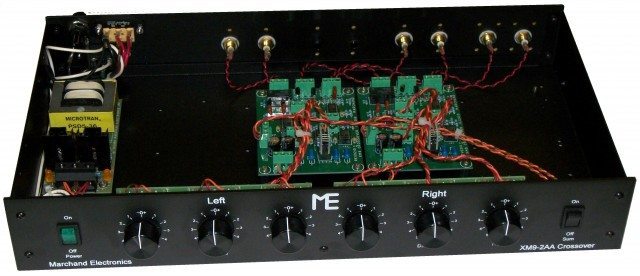
A consequence of this device was that not only did it make things sound better, but it also offered the DJ control over the gain of these frequency ranges via potentiometers. Early disco mixers with an eye towards enhancing their sets were quick to pick up on the fact that they could use their crossovers for dramatic effect. Caught up in the creativity of the moment these DJs learned to cut the signal going to the sub, amplify the signal going to the tweeters, and in general, work the overall sound as it went through the system.

The RLA crossover was an incredibly popular design and could be found in many of New York’s most famous clubs during the heydays of disco and house (Studio 54 and Paradise Garage being two big ones). Yet, despite its onetime popularity, the active crossover as a DJ tool had some drawbacks. Since it allows the DJ direct control over the volume of a given band’s speaker, the active crossover can cause blown speakers and hearing damage in the hands of someone that doesn’t know what they’re doing. Though still used to divide frequencies today, active crossovers are generally not used for dramatic effect (of course, there are some exceptions).

The progression from crossover to isolator is a simple one. The only real difference between the two is that the isolator collects the three bands into a ganged stereo output. This process castrates the crossover by making it effectively worthless for tri-amplification purposes. The DJ then no longer has control over the volume levels of each part of the physical soundsystem but instead is responsible for the relative volume levels of the bands in the overall master mix.

HOW TO DJ WITH AN ISOLATOR
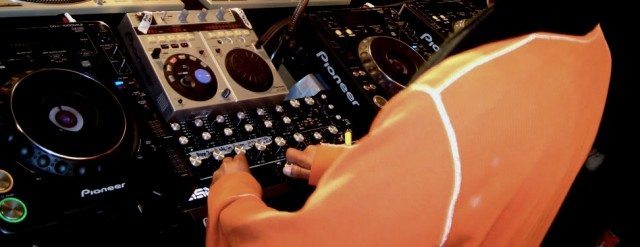
You might imagine that DJing with an isolator is similar to DJing with a DJ EQ. You would be fairly correct in that assumption. Yet, isolators afford more control over the music. When you roll off the bass on an isolator it takes out much more of the bass frequencies. For example, the E&S X3004 gives you control of everything from 10-300 Hz. Contrast this with the Pioneer’s DJM 800 bass EQ (10-100 Hz) and you get an idea of the difference in frequency range between built-in EQ and a dedicated isolator. Here’s a video of someone adjusting the frequencies on their E&S as a demonstration (note: it’s modded to not have as much gain).

Since the crossover days there has arisen an unofficial school of DJ technique that almost rivals turntablism in its complexity. Different than turntablism however is that none of these techniques have official names. Sure, you can cut the bass (who can’t?), but can you add tremolo to the midrange and make it sound good? The art of isolation is an art of unsubtle manipulation of dynamics and the easiest way to become inspired is by learning through example.


Joe Claussell (above) is considered by many to be one of the most prolific (and controversial) isolator users. His fingers never leave the knobs and he manipulates the individual frequencies to create a staccato effect that emphasizes the vocals and dramatic tension of the music. You’ll notice that his touch creates an almost broken effect in the rhythm.


Similar, but more laid back, is Theo Parrish who, while he’s still all over the isolator, lets his tracks breath. His style isn’t so much to create new rhythms so much as to play with the tension of the music and emphasize individual sonic elements in the music (such as the electric piano line). Watch the above video and witness what the smoothness of an isolator can do in the hands of someone who has a lot of balls.


On a different tip is Derrick May who utilizes the isolator as an entirely rhythmic tool. He uses his isolator to create a jagged sound sculpture with abrupt moments spent on each band. He’s constantly changing frequencies and this creates layers of depth to his otherwise loopy and one-dimensional track. Again this is another way that isolators can be used, to create dynamic rhythms. If you watch him, you can see that he almost looks like he’s playing the drums.

Final Notes

The past three videos all showed examples of people going nuts on the isolator. While it can be fun to do this from time to time, unless you are one of those top-notch DJs above, you ought to bare in mind the following axiom: “everything in moderation.” Going Joe Claussell on an audience that’s not attuned to it will only result in people wishing you would stop. A part of playing with dynamics and understanding how to use an isolator is to know when to let a track rest and allow the dancers to enjoy the music as it was recorded by the artist. Understand this and perhaps someday you’ll be able to achieve the level of euphoria exhibited in the next video.

POPULAR ISOLATORS

- Gary Stewart Audio ISO X
- Electronique Spectacle E&S X3004
- Dope Real Model 3300
- Thrive Bender
- Systems By Shorty SBS S3X
- Vestax DCR-1500
- Alpha Recording Systems ARS Model3500
- Bozak Iso-X

We want to hear from you: share your experiences and ask questions about DJ isolators in the comments! 
I Loved This Article >


  • http://www.djayggregator.com/2011/12/12/an-introduction-to-mixing-with-dj-isolators/ An Introduction To Mixing with DJ Isolators | Djayggregator

    [...] article, we take a look at what a DJ isolator is, how they came to be, how to mix… Read more Go to Source Share this on: Mixx Delicious Digg Facebook [...]

  • http://www.facebook.com/kerry.adams Kerry Adams

    Of course, the effect that an isolator rigged up traditionally (acting as the crossover) is going to be completely different to how they are used today (as glorified EQ’s) – traditionally, cutting the bass would essentially be turning down the subs, but there would still be ‘bass’ going to the main speakers, but no longer reinforced by the subs. Now, cutting the bass cuts the bass out of everything – like a high-pass over the whole mix. It’s a subtle, but significant difference.

  • malzfreund

    awesome article!

    p.s. i want that rane rotary mixer

  • kramerbuccs24

    gonna be checking out some of gary stewart’s NYC stuff ASAP! thanks guys

  • Nattevagten

    Need videos – can’t see them.. anyway very interesting article ! Thx !

  • http://www.eastendlideejay.com/DJNews/archives/109 An Introduction To Mixing with DJ Isolators

    [...] In a natural followup to last week’s article comparing filters and EQs, it’s time to take a closer look at the powerful audio devices known as isolators. In today’s article, we take a look at what a DJ isolator is, how they came to be, how to mix… Read more [...]

  • http://www.facebook.com/dj.rafi.v Rafi V ??

    Vid?

  • DJNickMiller

    The videos aren’t actually on there anywhere….

  • Spacecamp

    Fix’d. 

  • Spacecamp

    Fix’d. 

  • http://twitter.com/derricklove Derek Opperman

    He is the shit.

  • Sobi

    I almost never comment on these blogs, but I’d like to point out that Body and Soul parties  were some of the most memorable events in the past 20 years for me. Definitely a NY institution… as well as the PS 1 parties from everything they seem to be.

  • http://twitter.com/derricklove Derek Opperman

    Yeah, full range is definitely the classic way.

  • Bergle

    Can anyone tell me if the headphone the asian guy in the last video is custom or commercially available? thanks in advance.

  • Mylestec

    Great article…. active crossovers rock!… especially when there is proper compression and limiting on each amplification band output

  • Alex Apogee

    looks like a modified Vestax KMX 3

  • Test

    http://www.djexcel.com/wp/wp-content/uploads/2010/12/img00206-20101224-2301.jpg i played at a club that had rotary’s on a 800
    really liked the different feel

  • http://twitter.com/derricklove Derek Opperman

    It’s custom from Japan. The guy that used to make them with the light stopped. They are fairly easy to make though. Google (or Ebay): lollipop headphone.

  • JoeJackson

    i was walking through the park the other day and I saw two gay guys kissing, that was the gayest thing I’ve ever seen…. until that wierd jap today, not even funny just wierd perv’y jap shit.

  • Anonymous

    Just look at that line EQ, bang on the yellow. RESPECT the levels, man.

  • Ryan Supak

    A subject near and dear to my heart. There’s definitely a whole world of technique associated with isolators (and rotary mixers), and most of it doesn’t have a name. It’s all very personal and “intuitive” technique, in my opinion.

    I use an RLA-type crossover in my live rig, as well. (In the ’80s, Rane manufactured many of the RLA crossovers in existence.)  An RLA Crossover does have one big advantage sound-wise over an isolator, and that’s the vastly increased headroom per-band. You can get a lot more out of a *real-world* sound system because everything isn’t being “clamped” into a single summing stage as it is with an isolator. It’s a subtle difference and it sounds insignificant but the difference in use is immediately obvious.

    There are technically some things you can’t technically do with an isolator that you can do with per-channel EQs, but in *practice* an isolator is much more precise and expressive. To me a real analog isolator is in a whole different league in sound and responsiveness from something emulated in software.

    My preference is for a Bozak 4-band Crossover combined with a Steve Dash 5-Band EQ (this is yet another descendent of a Richard Long design). Combining the boost and cut curves from each allows “live mastering” as well as some special tricks, like “Pultec-style” EQ curves.

    Attached: my mixer rack, which includes the things mentioned along with a souped-up Rane 1620LE mixer.

    rs

  • http://twitter.com/derricklove Derek Opperman

    Nice rig.

    Have you found that your Urei sounds better with the balance pots and EQs removed? I’ve been considering doing that to mine, but I can’t tell if it’s worth it or not…

  • Ryan Supak

    David Meza with Duo Audio is currently making them. These start at $150:
    http://duo-audio.com/headphone.html

    His craftsmanship is impeccable and he’s a very nice guy to boot.

    rs

  • http://www.facebook.com/profile.php?id=100000567074969 Hector Guerra

    nice rack

  • Ryan Supak

    Thanks Derek. It’s really a joy to use and even “lay-people” comment on the sound difference between this and a more “Mass-Produced” setup.

    EQ: The unit definitely sounds different to me with EQ bypassed. It’s a lot less “warm” but more balanced IMO. Especially the midrange benefits, to my ears.

    Pan: According to my measurements the stereo separation increased slightly with the Pan mod. (My understanding is that the original reason installers bypassed the Pan was so that DJs wouldn’t accidentally pan all the way to one side and blow half the speakers because of the gain increase.) Nonetheless the sound does seem to benefit as a by-product.

    rs

  • Minimal

    God, I love that last vid, it’s how I discovered ‘atmospheric beats’ years ago, still one of my fave tracks.

     It’s not gay, the guy is dreaming about looking up this chick’s panties.Even if it was gay, who cares. Such enthusiasm is to be commended.

  • Djzense

    It remember my filters.

  • Filterband

    Uses by NY hip hop DJs, no? I’m thinking Tunnel era Flex. Also more generally in production, all genres. More!

  • http://www.facebook.com/laurin.schafhausen Laurin Joel Schafhausen

    Great Stuff!

    Some years ago I sold my A&H Xone 62 and my 3 Kaoss Pads.
    And bought a Urei 1620 LE and a E&S isolator.
    Best decision I ever did!

    One little point:
    The DJM 800 has the LO-crossover point at 70Hz not 100Hz
    The crossover point itself is one thing but more important is the crossover slope.
    I had modded my E&S isolator to an crossover point of 100Hz instead of 300Hz. 

    The Alpha isolator and the SBS (ISO-Q2 not S3X that is a Richard Long style crossover)
    have a parametric bass EQs. 

  • Sjokoladekjeksogmelk

    Hmm, laptop djs trying to get cred. Maybe add some arcade buttons to the isolator.

  • Escapemcp

    Had no idea what the isolator was actually doing, until I saw this http://forums.pioneerdj.com/entries/20310563-djm-900-isolator-behaviour - it’s got graphs (scroll down to hi, mid & lo graphs) of what actually being chopped by an EQ & an isolator in a side by side comparison..  that explained it much easier than the clumsy (sorry Derek!) explanation at the start of this article… all the way through I was trying to work out the difference between EQs & isolators.  Gave me a start point though for this afternoon’s surf… now.. back to work :)

  • J.F.

    Check out Mr. Mac’s website at http://blackscience.com for lollipop cue sticks. Nicest sticks around.  Dope console work too with rotary Rane.

  • Greed

    A vst isolator for Ableton? Anyone?

  • Sambertucci

    Grow up, what are you 8? Where’s this park Arkansas? Racist homophobe dj..? sounds like a dave chapelle skit.

  • Ryansupak

    Ableton 3-band EQ.
    rs

  • Gbrown44

    In the first picture what is that controller right in the top center of the picture?

  • Schlachter88

    Derrick May is a BOSS

  • James Kelly

    There is some rotary geekery on my blog, looking at the Rane MP 2016,
    Bozak ISO-x,  Vermona action filter etc…
    http://minimaljames.wordpress.com/2011/11/08/modular-analogue-dj-mixer/

  • http://www.facebook.com/people/Francesco-Brini/729465055 Francesco Brini

    mr. may one dimensional? what’s next ? are you kidding me!!!!

  • Janzak

    Alright so… basically the difference from an EQ is that an EQ dips/cuts the frequencies and isolators are more like shelves?

  • Djmattmccue

    Post a Louie Vega video all time isolator king

  • BM

    “And bought a Urei 1620 LE and a E&S isolator.
    Best decision I ever did!”
    +1
    or buy a DJR400 wich is the rotary mixer that use Claussell, Parrish and many more…

  • Anonymous

    Our company just had its holiday party at D36 and I did go check out the booth. IT was an Amazing setup.. the depressing thing was though, the dj that was playing wasn’t even touching the Urei or the Gary Stewart Isolator installed. He was playing Virtual dj and crossfading with the the arrow keys on his laptop. It was so depressing as the DJ probably had no clue what lay before him. Given the look of his laptop rig, I trust that his sound card was shite cause I was not impressed with the sound coming out of the speakers there. Garbage Into the Rig…. well, you know the rest.

    I was like how could this rig sound this shitty.

  • Djswillo

    Crazy discover for NewGenDJ’s !
    And crazy movie by the way!
    How Did u know about it ? :-)

  • http://www.facebook.com/matteoionescu Matteo Ionescu

    As a great fan of rotary mixing and isolators, I really loved this article. Been owning and testing most isolators – Vestax, E&S, SDX, Bozak – they’re all much better than every channel tone control ever found in a dj mixer. The ergonomics are much different too and let you enjoy another world of interaction between the dj and music. My personal favourite is the SDX iso by Steve Dash audio, besides the fabulous sound and cuts, it’s yellow dents allow better visual feedback on the control positions, so especially in a dim environment it’s useful to be more in control of the situation. I’m very curious to test the new SBS which features parametric controls to allow a variable cut frequency.
     

  • woof

    liking the article! definintely an area to further explore and expand within my mixing technique, thanks!

  • http://www.funkyhousemusic.com/2011/12/26/dj-techtools-an-introduction-to-mixing-with-dj-isolators/ DJ TechTools – An Introduction To Mixing With DJ Isolators | Funky House Music | FHMDC

    [...] Source: DJ TechTools [...]

  • Anonymous

    Honestly, I thought all three of these videos sounded like crap.

  • INFO

    Free Music Demo download ENJOYSBS DESIGNS PROCESSING AUDIO SAMPLER – A FREE AUDIO SAMPLE MIX DEMO – 80 MIN DOWNLOADHEAR THE HIFI RECORDED QUALITY OF CHOICE MUSIC THRU THESE AMAZING NEW PROCESSORS FROM SBS DESIGNS – THE ISO-Q2 & SP1 TUBE WARMING PROCESSOR….GO TO THIS LINK FOR THE FREE LINKhttps://www.facebook.com/pages/SBS-Designs/144309389012800

  • http://www.facebook.com/people/Sbs-Shorty/1851472355 Sbs Shorty

    Free Music Demo download ENJOY

    SBS DESIGNS PROCESSING AUDIO SAMPLER – A FREE AUDIO SAMPLE MIX DEMO – 80 MIN DOWNLOAD

    HEAR THE HIFI RECORDED QUALITY OF CHOICE MUSIC THRU THESE AMAZING NEW PROCESSORS FROM SBS DESIGNS – THE ISO-Q2 & SP1 TUBE WARMING PROCESSOR….
    GO TO THIS LINK FOR THE FREE LINK

    https://www.facebook.com/pages/SBS-Designs/144309389012800

  • http://www.facebook.com/people/Sbs-Shorty/1851472355 Sbs Shorty

    Free Music Demo download ENJOY

    SBS DESIGNS PROCESSING AUDIO SAMPLER – A FREE AUDIO SAMPLE MIX DEMO – 80 MIN DOWNLOAD

    HEAR THE HIFI RECORDED QUALITY OF CHOICE MUSIC THRU THESE AMAZING NEW PROCESSORS FROM SBS DESIGNS – THE SBS DESIGNS ISO-Q2 & SP1 TUBE WARMING PROCESSOR….
    GO TO THIS LINK FOR THE FREE LINK

    https://www.facebook.com/pages/SBS-Designs/144309389012800

  • http://www.facebook.com/people/Sbs-Shorty/1851472355 Sbs Shorty

    SRY FOR REPAT AGAIN

  • http://www.facebook.com/people/Sbs-Shorty/1851472355 Sbs Shorty

    LOUIE VEGA NOW USES THE SBS DESIGNS ISO-Q2 SOLELY AS HE PURCHASED 2 SBS DESIGNS ISO-Q2, AND HAS BEEN VERY VERBAL ON HIS FEEDBACK ON HOW HE LIKES THIS ISO-Q2

  • http://www.facebook.com/people/Sbs-Shorty/1851472355 Sbs Shorty

    THE SBS DESIGNS ISO-Q2 FINEST SOLID STATE 3 WAY ISOLATOR & EQ…..TAKING ORDERS NOW,SBS Electronics – Iso-Q23 WAY ISOLATOR & PROGRAM EQGAIN SPECSINFINITY CUT, + 15 DB BOOST PAST 12 OCLOCK / UNITY SETTING ON POTSLOW AND HIGH FREQUENCY CHOICELOW FREQ POT RANGE FROM 50 HZ TO 400 HZ HIGH FREQ RANGE FROM 3.1 K TO 12.6 KTHE SBS ELEC FEATURES A MASTER REAR PANEL..THIS FEATURE IS DESIGNED FOR FOR MIXERS WIDE IMPEDANCES SO THERE IS NO LOSS IN DRIVE IN ANY CONFIGURATION IT IS USED IN, WITH BRAND X, Y OR Z. REAR PANEL MASTER GAIN POT, THE MASTER GAIN RANGE IS FROM OFF TO MATCH UNITY.THE MASTER GAIN TRIM CAN BE USED TO REDUCE THE DRIVE TO A SYSTEM FOR ADDITIONAL PROTECTION WITH HEAVY HANDED DJS SO OVER LIMITING IS NOT NEEDED, OR TO INCREASE THE GAIN ON A SYSTEM FOR MIXERS WITH LOW DRIVE SO YOU DONT HAVE TO DRIVE THEM SO HOT FOR BETTER FIDELITY.EFFECTS LOOPSWITCHABLE UN BALANCED EFFECT LOOP IN OR BYPASS, SWITCH IS LOCATED ON REAR PANEL.THE ISO-Q2 CAN BE USED IN A LOOP OR MAIN OUT OF ANY MIXING CONSOLETHE SBS ELECTRONICS ISO-Q2 IS DESIGNED TO BE USED IN A EFFECTS LOOP OF A MIXER, OR IT CAN BE USED ON A MAIN OUTPUT OF ANY MIXER.I/O UN BAL RCA IN AND OUT, OR BAL IN AND OUT.BAL ZONE / TAPE OUTRCA UNBAL EFECTS LOOP Power 110 – 240v ready with a switchFREQ RESP 8 HZ – 100 KHZDIMENSIONS1 RU8 IN DEEP WARRANTY5 YR PARTS AND LABOR WARRANTY

  • http://www.facebook.com/people/Sbs-Shorty/1851472355 Sbs Shorty

    The SBS S3X is a 3 way xover not an isolator, the SBS Designs Iso-Q2 is a Isolator & Program Eq

  • TheAmazingBaz

    I hate Ableton’s EQ 3 (lack of real flat response, m4l required put 0 db at the 12 o’clock position) and have been trying a few alternatives with questionable luck. I’ve been looking for 3rd party options that work better, but as Ryansupak’s post shows, most people stop looking fairly early on. I’ve been playing with having racks with multiple instances of the EQ8 (to get the 48db cut), but as you may have noticed it’s a little hard to get the “isolator” sound dialed in to the extent that it sounds the same on larger systems.

  • http://www.djtechtools.com/2012/03/11/eq-critical-dj-techniques-theory/ DJ TechTools  |  EQ Mixing: Critical Techniques and Theory

    [...] touched on mixing EQ and different types of EQ before here at DJTT – our recent article on isolators was not only very popular but an excellent introduction to the technical side of frequency [...]

  • http://www.chronoshouston.com/2012/03/12/eq-mixing-critical-techniques-and-theory/ EQ Mixing: Critical Techniques and Theory | CHRONOS

    [...] touched on mixing EQ and different types of EQ before here at DJTT – our recent article on isolators was not only very popular but an excellent introduction to the technical side of frequency [...]

  • Cbodt

    I just bought a rane rla style, im mounting it in the rack and locking the rack, the dj can play with the treble and bass on the urie. let the music play, is what i say

  • http://www.chronoshouston.com/2012/03/16/pioneer-rmx-1000-announced-new-remixsampling-device/ Pioneer RMX-1000 Announced: New Remix/Sampling Device | CHRONOS

    [...] FX: If you’re not DJing with an isolator mixer, this section will allow you to emulate that effect. In addition to isolation, there are three [...]

  • http://mymixes.net/2012/03/eq-mixing-critical-techniques-and-theory/ EQ Mixing: Critical Techniques and Theory | Mymixes.net

    [...] touched on mixing EQ and different types of EQ before here at DJTT – our recent article on isolators was not only very popular but an excellent introduction to the technical side of frequency [...]

  • http://mymixes.net/2012/03/pioneer-rmx-1000-announced-new-remixsampling-device/ Pioneer RMX-1000 Announced: New Remix/Sampling Device | Mymixes.net

    [...] FX: If you’re not DJing with an isolator mixer, this section will allow you to emulate that effect. In addition to isolation, there are three [...]

  • http://www.djtechtools.com/2012/03/16/pioneer-rmx-1000-announced-new-remixsampling-device/ DJ TechTools  |  Pioneer RMX-1000 Announced: New Remix/Sampling Device

    [...] FX: If you’re not DJing with an isolator mixer, this section will allow you to emulate that effect. In addition to isolation, there are three [...]

  • http://www.gimbei.de/blog/dj-tools/eq-mixing-critical-techniques-and-theory/ EQ Mixing: Critical Techniques and Theory

    [...] touched on mixing EQ and different types of EQ before here at DJTT – our recent article on isolators was not only very popular but an excellent introduction to the technical side of frequency [...]

  • http://www.gimbei.de/blog/dj-tools/pioneer-rmx-1000-announced-new-remixsampling-device-2/ Pioneer RMX-1000 Announced: New Remix/Sampling Device – HGDesign – Helmut Gimpl – Ruhpolding

    [...] FX: If you’re not DJing with an isolator mixer, this section will allow you to emulate that effect. In addition to isolation, there are three [...]

  • flyer

    Think some of these “isolator-dj’s” over-do-it a bit……
    Isolators are ment to ad excitement to the tune, not trash it ;-)

  • http://monimega.com/blog/2012/10/17/video-dj-isolator-tips-by-dj-shorty/ NUTesla | The Informant » Video: DJ Isolator Tips by DJ Shorty

    [...] December, we wrote an article covering the basics of DJ isolators and highlighting the auteurs of that style. Derek, the author of that same article, shared this [...]

  • are you joking?

    Your marketing is tasteless and just plain awful. Turn off caps lock.

  • http://www.djtechtools.com/2013/01/07/isolator-effect-mapping-in-traktor/ DJ TechTools  |  Creating An Isolator Effect Mapping In Traktor

    [...] written about isolation-related techniques in the past – read our Introduction To Mixing With DJ Isolators_kmq.push(["trackClickOnOutboundLink","link_50f3cace88752","Article link [...]

  • SBS Shorty

    Here is a great Review on the SBS Designs Iso-Q2

    http://www.residentadvisor.net/forum-read.aspx?id=219510

  • greg zifcak

    This would only be true if the active crossover was after the amps (i doubt this was ever the case). In a tri-amped system, the amp that powers the mains is never getting any of the bass signal that the subs get.
    The real difference is that with an isolator there are now a summed crossover (isolator) in series with the system crossover before the amps. Not sure how perceptible this difference is.

  • http://www.facebook.com/laurin.schafhausen Laurin Joel Schafhausen

    This is not true!

    The original RLA DJ crossover had 3 outs.
    Sub: 20Hz to 100Hz 18dB BW
    Fullrange: 20Hz to 20.000Hz
    Tweeter: 8.000Hz to 20.000Hz 18dB BW

    With the Paradise Garage in mind the sub out would control the Levan horns.
    The fullrange would control the Ultima.
    Ultima = four 15″ rear loaded + 2″ JBL on JBL 2395 lens + JBL 075 with a passive crossover network including delay correction.
    The ultima would play from 40Hz to 18.000Hz.

    The tweeter out would control the flown tweeter arrays (each consists of four JBL 075).

    Stacked and set up with an incredible amount of knowledge there is no cancelation in the bass!

  • http://www.djtechtools.com/2013/05/17/10-essential-mixes-for-aspiring-djs/ 10 Essential Mixes For Aspiring DJs | DJ TechTools

    [...] 1 Artist: Theo Parrish Listen: Full mix on Mixcloud Why it’s so great: A couple years ago we posted an article about isolators, those esoteric pieces of gear that allow DJs to play the EQs like an instrument. Theo Parrish is a [...]

First Time?

This site is dedicated to digital DJs. We develop performance tools and teach cutting edge techniques that enable creative expression. Visit tutorial videos on youtube, equipment reviews in the blog and a very helpful community in the forum. New articles every Mon, Wed, Fri.

RSS DJ TechTools Forums

  • [Other] SGX - Right Back Up (FlakkMC Edit)
    https://soundcloud.com/flakkmc/sgx-right-back-up-flakkmc-edit I had the itch to start producing, so I decided to make a rearrangement of Right... […]
  • akai lpd8 mapping
    hi all, totally newb here... apologies for stupid question but im pretty sure you will be able to help me.... i jave just bought an akai lpd8 and... […]
  • Wanted: Midi Fighter PRO
    I've been looking to buy a Midi Fighter PRO for ages! Not interested in 3Ds, Spectras or Classics! Inbox me if you're interested in selling, I am... […]
  • Worklog/Guide: Painting Technics SL-1200
    I bought two SL1200s that were in pretty rough condition, but I couldn't pass up the deal I got. Shout out to DjLiquitATL for giving me tips on... […]
  • Anybody got tips on getting started with producing tracks??
    I've been making my own personal mixes and sharing them with friends for a while now. I want to take a step forward and start producing my own... […]

DJ History: Spring 1979′s Issue of D.J. International

Read More...