TO KEY OR NOT TO KEY

tokey_orNotdj

Some DJs do it all the time, while others do it only occasionally. Some DJs never do it and have no intention of doing it. We could be talking about hooking up with groupies, but in this case, we’re talking about mixing in key — also known as harmonic mixing. This is not an article on how to mix in key, but rather about key mixing in the real world of the professional DJ. We look at the advantages, disadvantages and downright pitfalls of attempting to mix for an extended period of time harmonically in key. Read on to find out how those keys can affect your performance when playing to a live audience, for example, in some instances they can make you sound awesome but sometimes they can backfire horribly.

WHY MIX IN KEY?

headphones_Insert

If you want to:

* Perform longer mixes

* Without key clashes

* With win/win sonic result every time

*

Then you need to mix the records by key. Using this method, you can run the mixes for much longer, while they sound all the sweeter.

When a DJ first starts out on the long road to learning how to mix it is at first a massive achievement just to keep 2 tunes in sync for the duration of a mix. Once that becomes easy, the next hurdle is phrasing the mix so that things happen at the right time, for example the baseline of one record finishes just as the opening hook on the new track starts. After that, quite often a novice DJ falls into the trap of running the mix for too long — turning what started out as a good mix into the key clash from hell that sends even tone deaf customers diving for cover.

HELP! HOW DO I FIND THE KEY?

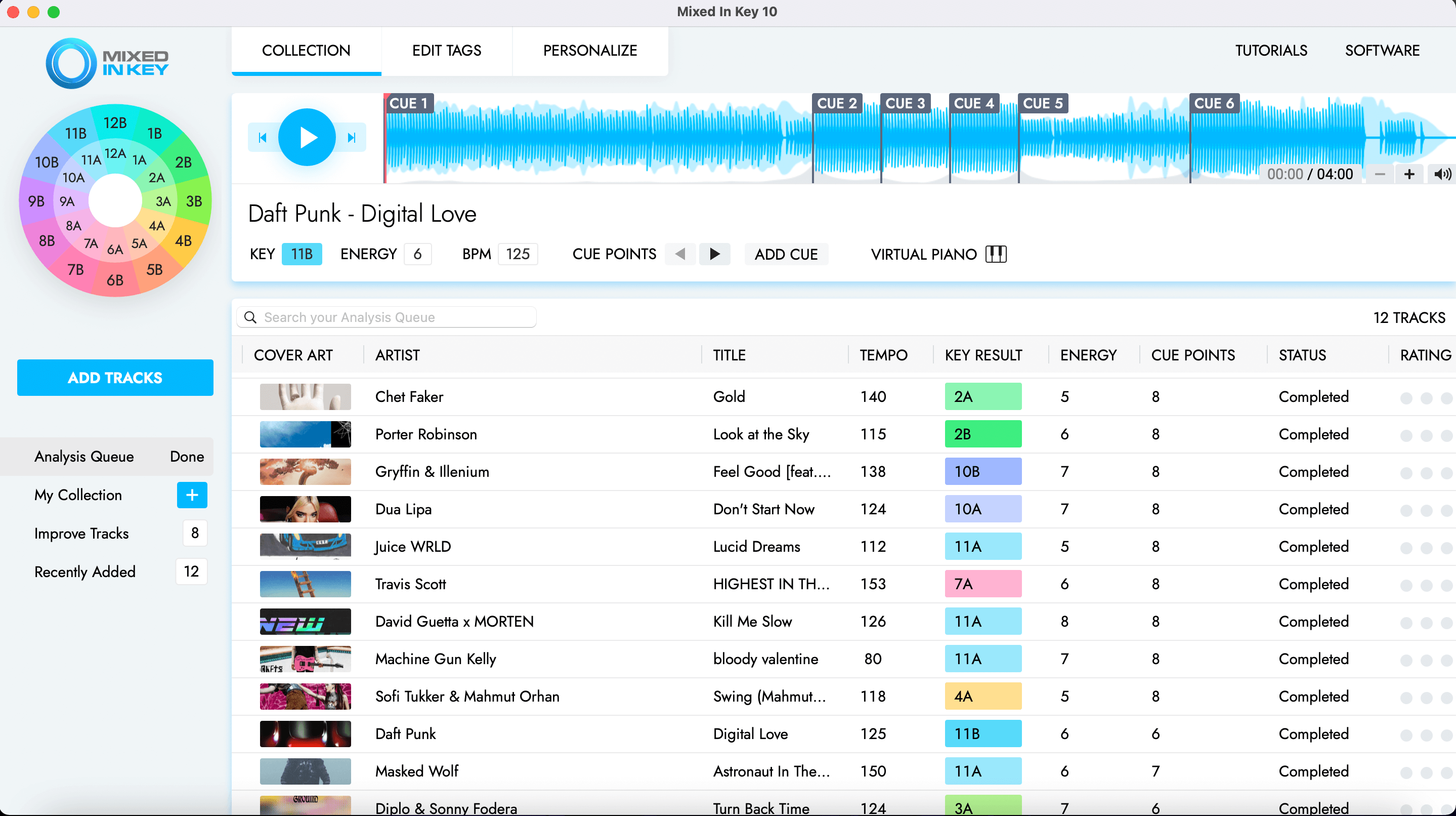
If you are musically trained you can find the key yourself by playing it on a keyboard. Otherwise, there are services like Camelot Sound, which for a small fee allows you access to thousands of keyed songs in a database that is updated monthly.
beatunes2

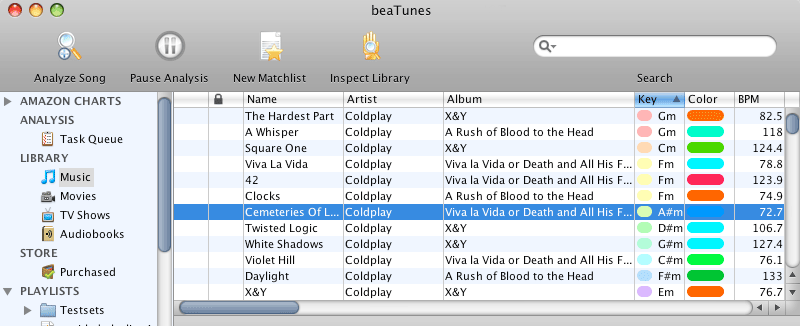
Also, programs such as Mixed In Key, Rapid Evolution and BeaTunes 2.1 analyze your music and report the key. But beware: in our tests, software has been proven to be around 60% accurate, which to me means that it gets it wrong 40% of the time.

WHEN IN IT’S BEST TO LOSE THE KEYS

By all means, spend the time it takes to learn how to key mix, but on many occasions, the right mix is not in the same key.

Let’s be honest: We are trying to rock the crowd, give people a great night and leave them wanting more. It’s the DJ’s job to watch the crowd to see what they are responding to and make sure the next tune is perfect for the moment. This is where harmonic mixing may fall flat on its face. What if your perfect next record is not key compatible with the one you are currently playing? If we were sticking religiously to the key mixing concept, the perfect track may not be playable for several songs, and the moment would be lost.
dj_head+phones

Remember that there is a two-way discussion between DJ and audience. If you don’t believe me, try this experiment:

Before your next set, write down 20 BIG records that you always play in the peak of the night and that you know always work with your regular crowd. Next, make a running order out of those tracks. At the gig, start to play your pre-planned set list in the peak of the night. I can say with confidence that you won’t get to the fifth record on your list before you have to change your plans.

When deciding to mix in key or not, consider the following:
• What’s most important: the mix transition or the playing the right music for the crowd?
• Would I be keymixing tracks just for the sake of doing it?

eanEan’s Corner of Sometimes Useful tips:

“If the mood is perfect and the floor is rocking then maintaining the key is often a good idea. If the mood is poor and the song is not working then its almost always a good idea to change the key and play the right song.”

*

USE IT; DON’T ABUSE IT

After many years of searching for the perfect formula of mixing music that has maximum impact on the crowd, I have discovered… there is NO MAGIC FORMULA. So, I do key my music, but like the EQ on the mixer, the loops in the CDJ or the effects in your software, I use keymixing just like any another tool.

Sometimes certain tracks in your set seem to group together in compatible keys, allowing you to mix in key for extended periods. Also, you may look through your list of keys, and it gives you inspiration to try a mix you might not have done otherwise. If you’re at home, keys come in very handy for experimenting to your heart’s content with creative combinations and remixes. But when you’re playing to a real live crowd, that next record has to be the right one first and foremost. If it key matches, that’s a bonus.

Lots of styles of music are well suited to harmonic mixing, including house, pop and R&B. Trance music, with its lush strings and sustained pads would really benefit well from keymixing, as well. Styles like rock might be less suited mainly due to song structure and live drummers. I also find that if you play a dance classics night where, all the tracks are already big and familiar to the audience, that allows more scope for harmonic mixing.

In a recent BBC Radio One documentary, the man voted by DJ Mag readers as the world’s number one DJ for three years running, Armin Van Buuren, revealed that he only uses key mixing occasionally, when he is lucky enough to find 2 tracks that he is already going to play, which also happen to have the same key.

About the Author: Tony Corless has been a professional dj for 23 years. If you enjoyed his first article for Dj TechTools, show some love in the comments.  Want to contribute your own ideas? Visit this page for more info.

Additional Reading: Ean Golden’s “Are You Mixing in Key?”

60 Responses to “TO KEY OR NOT TO KEY”

  1. Ron Solo

    March 23rd, 2010 at 9:32 pm Quote

    Thanks Tory for the article. I actually don’t usually read all the articles beginning to end, but this one struck my interest so i did. Just wanna give you a shout cause i enjoy the subjects which you chose to introduce to bring more depth on the topic of key mixing. Thanks again

  2. superfly

    March 23rd, 2010 at 9:55 pm Quote

    I learned to mix from a guy who was a musician as well as a DJ, and he was very into keying his music. He tried to explain it to me, but I didn’t care. 25 years later, I’m totally into it.

    I’m somewhat pitch/tone deaf, so I have to use the software, though I always manually confirm it with a piano synth in Ableton. I could usually tell when songs would flat out clash, and would avoid mixing them, but now that I can key everything, I really prefer to stay in key, especially with long remixes.

    It was also nice to find out that some remixes of songs I’ve been doing for years were in compatible keys.

    Good article, thanks.

  3. KJærbo

    March 23rd, 2010 at 10:05 pm Quote

    Big up Tony, thanks for a good virgin article ;)

  4. Anonymous

    March 23rd, 2010 at 10:29 pm Quote

    I think this is a very genre heavy thing as well. Some genres you can flip keys all over the place…. others, its usually a more gradual thing.

  5. DJ MAP

    March 23rd, 2010 at 10:44 pm Quote

    I’m somewhat pitch/tone deaf, so I have to use the software, though I always manually confirm it with a piano synth in Ableton.

    how exactly do you go about manually checking the key in ableton? i just got live 8 so im pretty new at it.

    also, another great dj tt article

  6. Anonymous

    March 23rd, 2010 at 10:47 pm Quote

    another good read. btw the pic gave me an idea for a cool shirt.

  7. superfly

    March 23rd, 2010 at 11:08 pm Quote

    I’m somewhat pitch/tone deaf, so I have to use the software, though I always manually confirm it with a piano synth in Ableton.

    how exactly do you go about manually checking the key in ableton? i just got live 8 so im pretty new at it.

    also, another great dj tt article

    I just use Ableton for the piano and play the chord the software chooses, then play the adjacent chords from the Camelot wheel. As DJTT showed in its key software comparison article, none of the software programs are perfect, but they are usually close and at least provide a starting point.

    For example, if the software tells me a song is in A minor, I’ll play the song and just play A minor, and the various chords adjacent, E minor, D minor, C Major, even G major and F major, and just listen to which one just sounds right. I’m not totally tone deaf, so I can tell when it sounds right, I just can’t pick the key out without the starting point the software provides. And even if I’m wrong, at least it’s all my ear, so its consistently wrong and should still work.

    The more I do it, the more I figure out songs chord progressions, and see the various overlapping notes between the chords, and how songs could probably be considered to be 2 or even 3 different keys, though I suppose real musicians know the “right” key, but for DJing purposes, I don’t have to know the one and only “right” key, since its about songs being in compatible keys.

    Hope that helps.

  8. Taz

    March 23rd, 2010 at 11:15 pm Quote

    Good article, its hard sometimes to break from what you feel would be the best song to mix into and from what the crowd needs but it is essential.

  9. dj professor ben

    March 24th, 2010 at 12:12 am Quote

    Really good article. One thing that should be clarified though is that mixing in key doesn’t necessarily mean just playing song after song in the same key. You can go up and down the keys in sequences that work to avoid clashing. If you move up or down one or two semitones at a time you can influence the perceived energy of the mix. This how-to is a really good resource on the topic: http://community.mixedinkey.com/Topic.aspx?ID=1621 .. On the camelot wheel this means going up or down in 2 or 7 steps, not just 1.

    But the gist of this article is correct — when the crowd is ready for that bangin track you’ve got, don’t worry that it’s 4 steps up the Camelot wheel; find a way to bring it in and go for it! Playing the right track is way more important than your key. Frankly, it’s way more important than your mixing. Hope I just didn’t start a holy war, heh.

  10. Ondra

    March 24th, 2010 at 12:35 am Quote

    Tracks keys is a nice tool to play with, but they require to use the master tempo function (or whatever-it-is-called-in-your-DAW-or-DVS). If you play tracks with the same key but with different tempos, the keys will class again, unless you switch master tempo / master key on.

    In my experience, all the master tempo algorithms are pretty poor when applied to the whole song. There are many artifacts that pop up, the tracks sounds flatter and muddier than before. I’m no hifi purist, but the result is audible even on a mediocre soundsystem.

  11. Sarasin

    March 24th, 2010 at 12:58 am Quote

    Great article!!!

    Thanks!

    I been doing it for a while, but needed to hear peoples thoughts on it!

    Awesome!

    :)

  12. Colly.tv

    March 24th, 2010 at 2:18 am Quote

    Nicely balanced and fair article there Ean, Although Harmonic Mixing can be advantageous, it should only be used sparingly, definitely not to be relied on. You can plan a set but you can never really stick to that plan. DJing is about doing what feels right at the time and the best DJs will be able to react to what is happening right now and build accordingly. Key mixing can help but even the best trance DJ’s (to which harmonic mixing lends itself to best) don’t use it that much.

    For a beginner it can be a useful tool to help you learn but once you get it, you are probably best trying to learn how to do it naturally.

  13. re-edit

    March 24th, 2010 at 4:06 am Quote

    Umm – what ever happened to using your ears to tell if 2 tracks go together?

    on a plus side – at least soon you wont have to use headphones :s

  14. DJSDive

    March 24th, 2010 at 4:22 am Quote

    Some food for thought: I wonder if you guys look at your playlists who do not mix harmonically but who do have key information on your tracks, do you notice that things tend to follow the harmonic mixing concept non the less? As in .. if harmonic mixing makes sense, wouldnt good DJ’s naturally gravitate towards it? If a song fits another song by key and we are saying that harmonic mixing makes for a good sounding mix, chances are we will be favoring mixing in key even if we do not actively apply the theory.

  15. Abyrne7

    March 24th, 2010 at 4:45 am Quote

    Great article. It’s exactly what I thought. I don’t mix in key myself because I tend to always be looking for that track that the crowd wants to hear.

  16. Gary Hipperson

    March 24th, 2010 at 5:01 am Quote

    Thanks for the article,

    I have been a DJ for 8 years and have recently got into harmonic mixing and this helped me decide how to use it, because i was unsure about using it all the time or just like you said as another tool!!

    This has helped
    Thanks

  17. Anonymous

    March 24th, 2010 at 5:39 am Quote

    Good article.
    One thing to remember is to use your EARS since all those key detection proggies only get it right 60% of the time (this is where my years of guitar playing finally pay off). Basically, if it doesn’t sound good don’t do it or wait for the break.

    Also, don’t go past the +-2 mark in Traktor, that’s when things start sounding flat & unnatural.

    I used to key mix alot but gave it up after a while because it just made everything too perfect. You need the tension or else it just sounds boring. But for extended jams, it really helps.

    cheers,

    fg

  18. baze

    March 24th, 2010 at 5:44 am Quote

    i’m a traktor scratch pro user
    I personnally don’t use the key
    i do it manually with turntables pitch
    i put manually 2 songs in the same bpm
    sometimes it works, sometimes not but it’s sure that i dont use the key lock even it gain you lot of time using the key lock…
    but good dj’s dont use it !

  19. Shane

    March 24th, 2010 at 5:49 am Quote

    Great article Tony. As technology progresses it’s important not to get lost in it. As stated in the above comments it’s imperative to be in tune to the crowd rather than sticking to a rigid “rule” like always mixing in key.

  20. Alien2k

    March 24th, 2010 at 5:59 am Quote

    Mixing is key is nice, but to be honest it is kind of a huge turndown. I really dont enjoy much neither listening nor playing all prepared studied sets, for me mixing in key has not worked it just restricted my sets. I love digital djing but a dj that carefully needed to analyse all his tracks in order for him to make tht proper choice… mmm not my style. Free your mind and listen to the music.
    In my memories the greatest moments that I have had listening to a dj perform is when he really mixes tunes that nobody could thought of, I am sure that mixed in key did not propose him those tracks…(I think that using all this software you will never give time to yourself to think about music).

  21. ridim

    March 24th, 2010 at 6:22 am Quote

    the Camelot Sound sound link is great

    can’t w8 to get home and create some mashups

  22. Rob Ticho

    March 24th, 2010 at 7:00 am Quote

    I was mixing in key for awhile, then got bored with it. It’s very useful for mash ups and remixing.

    The reason I’m over mixing in key, is that I found mixing in timbre to be so much more important and interesting. I like to mash a lot of tech house with similar sounding textures.

    I think it would be awesome if someone developed a camelot type system for timbre or even a piece of software such as mixed-in-key to help tag songs. Then again, it’s pretty easy to do manually.

    Also, keep in mind, a lot of what I play is somewhat atonal to begin with.

  23. Mr.Nicklebe

    March 24th, 2010 at 7:39 am Quote

    Great article first off.

    I purchased mixed in key about a week ago to make song selection slightly easier. It’s made a massive difference tomy mixing, i find songs that i would never of guessed work well together. However i am starting to realise that it’s probably not worth mixing like this constantly.

    What i thought was going to free me up to find new tracks actually in a way started to limit me because i was always trying to mix into the correct key.

    As this article says though its good to mix in key when its appropriate and ’sounds right’.

  24. Phil Morse

    March 24th, 2010 at 8:23 am Quote

    It’s a great way to match acapellas with instrumental tracks too. If you know the keys of your acapellas you can drop them in, secure in the knowledge they’ll work over related or same-key tracks every time. All you need is a list of your acapellas all ready keyed-up and you’ll appear to get it right “on the fly” every time. (Still have to use master key though.)

  25. jasonmd2020

    March 24th, 2010 at 9:10 am Quote

    I think this is a very genre heavy thing as well. Some genres you can flip keys all over the place…. others, its usually a more gradual thing.

    I agree. With styles like house, trance, and the more pop oriented stuff, key mixing is a good idea. But when I mix I’m usually lean twords, industrial, drum-n-bass, illbient, experimental things. Where dissonance and unexpected changes are part of the style. So it really depends on what you’re spinning.

  26. Ian T

    March 24th, 2010 at 9:40 am Quote

    There’s something to be said for playing with the “vibe” of the music, and not fussing over key. If you solidly know the library you have with you on (X) night/gig I can, at least, generally have a good idea of what will mix in nicely next-even if it isn’t a pre-set order/playlist.
    That said, I like to keep say-200 songs with me for shows. Not a stupidly large library. This way I know them really well.

    My 2 cents.

    Sweet Article.

  27. Meo

    March 24th, 2010 at 9:43 am Quote

    Very nice article.

    Iv been using MIK for a good while and love to mix harmonically. It is however very true that harmonic mixing is far from some ultimatum. Instead harmonic mixing tends to give the listeners something more ear pleasing rather than energetic. It works wonders in tapes but during actual sets it might not be that great a thing and actually when over used might end up like a soufflé gone wrong. Effects, being similar tools, work the opposite most of the time.

  28. Tyler

    March 24th, 2010 at 9:52 am Quote

    Great job. I like the multiple quality reasons for either mixing in key or not mixing in key. The Armin fact is really interesting too. I think it is important to watch keys to keep from really bad clashing but looking for exact matchs really does take away from the main thing djs are hired for, playing the right record at the right time. I also agree that this is just another tool to add periodically to a set.
    One other cool thing I do harmonically that really adds energy is move up chormatically between keys when i do a fast transition between songs ex. C Major to C# Major. You can’t mix 2 songs this way because they will clash horribly but it really adds a nice effect. I think Ean has mentioned this before.

  29. EmP

    March 24th, 2010 at 10:44 am Quote

    Love comment!! hahaha

  30. sean

    March 24th, 2010 at 12:31 pm Quote

    good story…

    so if the apps you tested only score 60/40 (you might as well say 50/50), what does that really say about using them to analyze the key…dont use them?

    My advice, get yourself a basic fundamental understanding of music (its not hard, they teach it to 11 year olds you know), use your EARS and do it correctly! You will thank yourself for it :)

    Of course if your mixing Dubstep all you need to know is its all in Cminor and 140 BPM, just leave that pitch slider where it is!

  31. Anthony Jacobs

    March 24th, 2010 at 1:21 pm Quote

    Great article! I could write a whole book on mixing in key using different approaches utilizing either DJ software, CDJ’s or vinyl. I believe once a DJ becomes savvy with basic music theory and is able to accurately key his/her tracks, it’s much easier to learn how to also “break these rules” as well. ;o) Btw, I have many great examples of fluid creative key mixing here –> http://www.myspace.com/djanthonyjacobs

    Again, great advise here… thanks! Ean sums it up best

    “If the mood is perfect and the floor is rocking then maintaining the key is often a good idea. If the mood is poor and the song is not working then its almost always a good idea to change the key and play the right song.”

  32. calvin01

    March 24th, 2010 at 1:50 pm Quote

    nice one tony.i’m now thinking of gettin mixed in key…….you mention the software only gets it 60% right.if i want to find out if the software has correctly analyzed the file/track.how would you suggest i go about this?.

  33. tucci

    March 24th, 2010 at 2:01 pm Quote

    For those of you who have a bit of music theory knowledge, here are my favorite intervals to use when mixing:

    1. Up a perfect 4th (harmonically works great 90% of the time)
    2. Up a Minor Third (gives a feeling of going forward)
    3. Up a tritone (similar to the jazz tritone substitution concept)
    4. Up a half step (needs to be a quicker mix)
    5. Up a perfect 5th (although the bassline tends to feel pretty different after a change like this)
    6. Up a Minor 6th (often pretty comfortable)

    these are obviously not rules as a good dj can mix pracically anything but these are the things i’m often thinking of in the booth with some degree of success

  34. Dlarson

    March 24th, 2010 at 2:15 pm Quote

    Good stuff, keep it coming.

  35. DJ Moonie

    March 24th, 2010 at 3:18 pm Quote

    I think its been pretty much covered, but like anything else, harmonic mixing is a tool and nothing more.

    Its up to you as a DJ to decide when to use what, and how!

  36. Markku Uttula

    March 24th, 2010 at 4:12 pm Quote

    Also, don’t go past the +-2 mark in Traktor, that’s when things start sounding flat & unnatural.

    Keeping in mind that when you have +-2 semitones of margin in both of your players, you can go pretty much from any key to any other key. If you can’t get the keys to be the “same”, at least they should be in the “compatible” range with that amount of correction.

  37. music1

    March 24th, 2010 at 4:14 pm Quote

    Great article Tony,I agree it’s more important to pay attention to your crowd than worrying about mixing in key.I think all this digital technology and various music programs that are out are great.But for some of us that have been spinning for over 20 years never mixed or maybe even new about harmonic mixing.you just learned what records went well together and always pay attention to your dancefloor and new when to drop certain tracks.

  38. tony corless

    March 24th, 2010 at 5:41 pm Quote

    >

    calvin01
    >>March 24th, 2010 at 1:50 pm Quote
    >nice one tony.i’m now thinking of gettin mixed in key…….you >mention the software only gets it 60% right.if i want to find >out if the software has correctly analyzed the file/track.how >would you suggest i go about this?.

    Ok so lets say the software has reported it as the key of C but you are not sure if its correct.
    On any keyboard play the C note along to the music, it should blend in as should the perfect fifth of C which is G.
    If both notes blend in with the track the software is correct.

    Lets just say that C sounds off but G blends in
    Find the perfect fifth of G which is D if both these blend in the key is G.

    Alternativly camelot sound {mentioned in the article} allow you to subscribe to a database of keyed music,the music is keyed by a professional musician and is 100% correct.
    Hope that helps

  39. Mark Davis

    March 24th, 2010 at 7:51 pm Quote

    Great article! Slight correction: We only say that our Camelot Sound harmonic mixing database is 95% correct, because nothing is perfect.

  40. jsizzle

    March 24th, 2010 at 8:10 pm Quote

    When I first discovered keying software like MIK, I went a little overboard with key mixing. Just as many others have said, I quickly realized that basing your track selection solely on harmonics is a HUGE mistake and can make for soulless boring sets. There is absolutely no better DJ skill than just truly knowing your music library inside and out and basing your track selections on your gut feeling.

  41. dishevel

    March 24th, 2010 at 8:25 pm Quote

    hey guys, i’ve been working on a few mixes and i’m really noticing that some of my flexibility is suffering. i feel like i have a really high standard with synths not clashing, and have been making way too many picks based on key.

    getting away from that, can anyone recommend some good resources for learning how to mix better with melodic tracks (example: trancy-progressive house)? i’d love to read how to better use the xone:92 filters in traktor to get more seamless mixes.

    maaaaaaybe someone can write an article on more effectively mixing with hi/lo pass filters (pretty please)?

  42. djerikt

    March 24th, 2010 at 11:08 pm Quote

    mixed in key is really dope, and big props for people who use it. I remember seeing RazorMaid cd’s in the early 90s with key info on it. I don’t use mixed in key for my sets, since my choice of songs goes by rhythmic energy or impact of hit. Other criteria moves my sets in different directions, not key. I have heard it used in soulful house and trance where it was amazing.

  43. dj master p

    March 25th, 2010 at 5:41 am Quote

    I usually prepare a base set for my evening of performance (new songs only), then I have a side list with all the bangers I know the audience like.

    My base set is key matched, and usually i stay on this set for 3 – 5 songs before mixing in what will rock the audience.

    I have however had people commin up and thanking me for particular good transitions.

  44. Roc

    March 25th, 2010 at 6:00 am Quote

    I think an understanding of how keys mix and the effect those mixes have on the listener is an invaluable tool for digital DJ’s. In this age of digital Djing where tempo and pitch can be manipulated seperately there are many more opportunities to mix in that track you think the crowd will like. Not harmonically compatible? Raise or lower it’s pitch until it fits better.

  45. D3RKIN

    March 25th, 2010 at 2:30 pm Quote

    I always believe that the best way to mix is know your tracks like the back of your hand. If you know your tracks you will know what goes well together. You get the best results by playing on the fly and not havinging any set. Bring what you want to hear, and just know what track you want to start with and that’s it. After that just go with it and if you know your tracks well enough you will know what goes well together. The best set are not planned or programed, programed sets sound robotic and monotonous. Feel don’t think….

  46. Mark Davis

    March 25th, 2010 at 8:38 pm Quote

    D3RKIN: If you planned to record your mix for others to hear, would you plan your mix in advance or just wing it?

  47. dishevel

    March 26th, 2010 at 8:05 am Quote

    @ D3RKIN, my friend, who’s much more experienced than I am, always says the same thing.

    @ Mark Davis (Answering that question posed to D3RKIN), I used to try to plan everything beforehand, but it takes FOREVER. Also, I’ve noticed that the mixes tend to come off as better when I go on the fly (from the programming perspective, I mean). So I’ll have a general sense of what sound I’d like to go for and then just wing it. I’ll then re-listen to the set, decide if I still like everything, and then re-record it with possibly a few track tweaks and to clean up the mixes.

  48. Joao Marcos Soares

    March 26th, 2010 at 12:11 pm Quote

    Niiice!
    I’m a musician and I really like to get everything in key. I’m starting as a DJ and didn’t think that the crowd’s feeling is more important than my need to get everything in key.

    I’m brazilian and this is one of the best blogs that I’ve read.

    Congratulations!

  49. the yosh

    March 27th, 2010 at 1:00 pm Quote

    big tnx Tony

  50. Jonsafer

    March 27th, 2010 at 5:07 pm Quote

    I agree with many posters. It can be nice to mix in key but it’s a small tool like effects (which doesn’t have to be used every time). It’s definitely more important to find the right song instead of right key.

    Thanks Tony for the article.

  51. a serra

    March 28th, 2010 at 4:20 pm Quote

    @djsdive,

    yea i stopped actively applying mixed in key a long time ago, but i still use it to keep my cds in order by way of the camelot numbers and i find that alot of time when i hit a really good mix i’ll go back and look and find that it is indeed two consecutive camelot numbers, although there are excllent mixes that don;t follow the rule of course.

  52. marnis

    March 29th, 2010 at 1:11 am Quote

    There’s a moldover youtube clip where he explains a different approach to harmonic mixing.
    http://www.youtube.com/watch?v=dznjQIarboY&feature=related

    He uses only six keys (A, B, C, D, E, G – which he thinks are the most common), and songs in any of the other six keys he pitch-shifts up or down to a neighbouring key. So now he has far higher chances of playing songs with keys that work together – but he doesn’t have to spend time thinking about it.

    Seems like a very efficient and effective solution, and runs with the theme that it’s a tool to help, but not something that needs to be considered on every mix…

  53. jaurelio

    March 30th, 2010 at 11:52 am Quote

    ….always in key is better than neither in key!!!

  54. Siddeffects

    April 8th, 2010 at 12:01 am Quote

    Yes I do mix in Keys when I’m playing my warm up set, as people are getting hooked up to the sounds. For my main set, I hardly use it and stick to my favorite tracks irrespective of their keys.

  55. Dimitri

    April 12th, 2010 at 2:59 pm Quote

    Harmonic mixing is what mash-up artists do. A good harmonic mix is basically a mash-up. I agree that harmonic mixing is more of a tool like any other djing technique.

  56. D3RKIN

    May 7th, 2010 at 4:44 pm Quote

    I have been djing for about 15yrs and have never mixed in key maybe I do it but not knowingly. I try to think what tracks will go best with the track I am playing. I always wing it, and most of the mixes work out perfectly. Cool things happen too like double break downs and riding out two break downs and having them both hit in at the same time dead on is a good feeling, or tracks coming in at just the right time. I think the bigest problem with dj’s starting out is that they don’t know how to count, and play vocals over vocals or just don’t mix there tracks long enough to build up together. My opinion is it is more fun to be spontaneous than planning everything out, it gets me just as excited as the crowd to hear my mixes for the first time. Nice article gave me another demension and insight as to how other dj’s plan there sets.

  57. Jared Smith

    May 16th, 2010 at 7:19 pm Quote

    I’ve got a question. I’m fairly new to the whole DJ-ing scene. I’ve been taking lessons since January and I haven’t really learnt anything other than key-mixing on CDJ’s. How can you mix a song well without using key mixing on CDJ’s?

  58. tony corless

    May 17th, 2010 at 4:56 pm Quote

    Hi Jared,
    What you would do is beat mix in your new song over a break[drums percussion quiet part] in the other track.
    Or you could mix in your new song and make sure the mix was finished just as the bassline or first musical part of the new song starts.
    Many DJs who are well know for their mixing ability have mixed for years without ever learning key/harmonic mixing.
    Although key mixing is a fantastic tool and can be used to great effect.
    If you are just learning its probably best to get a good solid mixing technique and then concentrate on playing the right music at the right time for the crowd.
    When this becomes quite easy to you should then consider key mixing in my opinion.
    Hope that helps!

Leave a Reply

  1. Quote selected text

First Time?

This site is dedicated to digital djs. We develop performance tools and teach cutting edge techniques that enable creative expression. Visit tutorial videos on youtube, equipment reviews in the blog and a very helpful community in the forum. New articles every Mon, Wed, Fri.
In the Store
 

Categories:
Follow us:
You're going to need Flash 8+ and JavaScript to use this site. How'd you get this far without it?

Dig through the Crates

Readers are Saying

  • Grizu: Ha, ha, didn’t know Damion Davis is working at Fritz. Somehow I completely missed out this event and didn’t...
  • Sanje: @ EanGolden So what you’re sayin’ is that the MC6000 is a “pass” in these regards because it...
  • Ean Golden: The only way to get CDJ quality scratching out of a controller is to have a direct connection from the Software to...
  • Sanje: @ dj johnny aftershock Lookin’ for advice here. I need a midi/mixer with analog mic ports, good sound (sound...
  • EDM.ZEN: [quote comment="29996"]And ive found this guy. very good to protect yo VCIs in any bag, i think. didnt buy it yet(...

RSS Hot Topics in the Forum