• Mudo

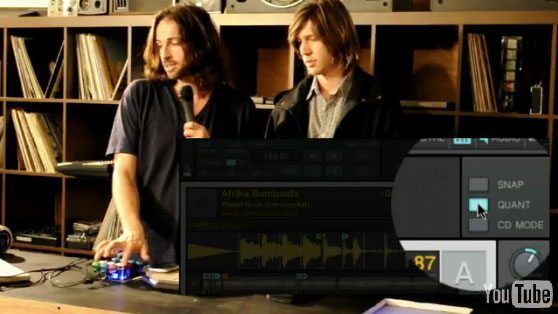
    The Midi fighter has a good response. This concept will be great apply to crossfader turntablism techniques and vice-versa.

  • http://tos.network.in.rs ToS

    Great, simple, can teach you so much. This should’ve been done earlier.
    Next practice:
    play one song in one player and try this beatig (if I may call it like that) with second player, but make it sound good.

  • http://www.dj-nvidia.com/ Dj Nvidia

    Hey Great video. Always looking for ways to improve my timing… videogames (like Dj Hero) work pretty well too and show that you can have fun while you practice

  • bustab

    Great idea for a tutorial, looking forward to trying it and the followups

  • http://twitter.com/sqyquest Sqyqyest

    Great tute, need to set more time aside each day to get some mano-a-metronome time in! Pity my Cue button is a little clunky, midi fighter buttons looks awesome for this.

  • Anonymous

    [quote comment="27903"]…

    The Midi fighter has a good response. This concept will be great apply to crossfader turntablism techniques and vice-versa.

    …[/quote]

    Exactly. It’s a great way to learn more complicated scratches, as you can hone your skills at a slower speed and gradually ramp up the tempo of your scratch. Then you can learn to double time your scratches as well. And like Ryan said, the metronome won’t hide anything, she’s a cruel mistress.

  • http://www.behance.net/cmster Cmster

    This will help I think
    defiantly will be practising more often

  • dubresearch

    Excellent, I’m looking forward to the more advanced tutorials! I looked around a little for drum tutor software that could be used for this sort of practice and found a couple of programs but nothing really grabbed me. I’m thinking the best route may be to download a DDR clone and then use GlovePIE to map the midi controller inputs to the PC keyboard.

  • Mr.Nicklebe

    This is perfect for me. I have 0 musical background, and my beat timing has a habit of getting a bit off.

    I will no doubt watching this video over and over again :P

  • Monkeybiz

    I tend to do a bit of this while I’m cueing up, when I’m getting a feel for where to actually cue up by ear, I usually go through cueing half-notes, quarter-notes, etc, a few times before I let the track go. Doesn’t matter whether I’m using vinyl, digital formats, or whatever.

  • http://www.nightclubber.com.ar/foro/166/tecnicas-djing/229210/ejercicio-simple-percusion-sampleo-beatjuggling-etc.html#post1787675 Ejercicio simple para percusi?n, sampleo, beatjuggling, etc – NightClubber

    [...] no podes ver el video, es porque YouTube no funciona o no tenes el plugin de Flash instalado. Fuente Video __________________ Facebook Positiva [+] Podcast MySpace Soundcloud [...]

  • http://www.myspace.com/djrodrigosm RodrigoSM.br

    Very nice video, I’m sure a lot of people would benefit from this.
    Nice introduction into metric structure.
    Just one hint: you might wanna include technical terminology in future installments like this, so people will know what to search for.

  • JumpinFrog

    I think it would be more beneficial to just take up piano. Will train your ear melodically, too. Too many DJs have never had experience playing *real* instruments. Meaning, instruments where the rhythm / harmony is produced totally by you. I for one think DJing requires tons of musical ability, but pretty much every legit jazz musician, for instance, can play a good bit of piano because it is so essential to music theory and understanding. Also it will train those little fingers to be nice and strong.

  • Fyoog

    [quote post="5093"]I think it would be more beneficial to just take up piano. Will train your ear melodically, too.[/quote]

    2nd on that, I learned the piano from the age of 7 for a few years until more pressing issues like girls and general teenage issues took up too much of my time, didn’t really get that far with it (could knock out stairway to heaven if pressed!). Then when I got into DJing i immdeiately noticed that I had a better advantage over my mates who had none of this training. I’m not saying you need to learn the piano to be a good DJ but it definitely helped me with aspects of it?

  • http://www.celtic-dj.com celtic dj

    wow,,great tutorial & video…
    thanks alot , needed this kind of push ,,,

  • Slater

    I played Jazz for years and couldn’t agree more with you guys. I just kind of cruised straight into DJing without much trouble. It’s nice because since day 1 I’ve only been working on new mixing techniques because my timing and phrase-consciousness was already there.

    I think an article on chord progressions/phrasing would be immensely beneficial to a lot of DJs out there. It just kills me when someone drops a new beat in the midst of a chord change, but that could because I played bass/drums so I’m always listening to the ‘meat and taters’ of a song and not so much the vocals or top end.

  • Tomero

    Thanks for the video, good job! I enjoy this website very much.
    I’d like to recommend taking a few djembe drum lessons as well.

  • JD

    Awesome video, will definately be using this :D

    [quote comment="27939"]
    I think an article on chord progressions/phrasing would be immensely beneficial to a lot of DJs out there. It just kills me [/quote]

    Second.. That would be massively helpful.. Unless i’ve missed it, doesnt seem to be too much info on keys etc around..

  • Tomero

    @JD

    Not much, but there is some.

    http://www.harmonic-mixing.com/HowTo.aspx

  • DJ OMAC

    Interesting video. Really like how you’re thinking outside the box on a lot of these installments.

  • Teiresias

    Usful stuff for beginners, and I’ll add +1 to the ‘having some musical experience can help you as a DJ’ mentioned by Fyoog and Jumpin Frog – 10 years of playing kit means I do tend to have one over on few people when it comes to beat and phrase matching

  • João Marcos (Brazil)

    Great video! Never had thought on that.

    Some cool thing about using the Traktor’s metronome is that, with the grid aligned in the music, you can see how exactly your pushing are on the phase meter (keep the Sync button turned off).

    I’m waiting for my controllers, so I just tried with my computer keyboard, that sucks for that. Or maybe it sucks just because my soundcard is a poor one.

    I tried the things with the Quantize button on and off and it didn’t make a difference, but it was because I was with the Sync button turned on.

    About the progressions and etc, I believe that is very interesting, but the timing thing you can get just playing drums, for example. It’s about are used to things on beat. Instruments like piano or anyone other that are harmonical or melodical, you get the rhythm just because you need to play the right note, but you need to do it on time.

    Learning about measures and the different times that a note can be (I can’t remember the musical name for that now – but like quarter note, 16th note) plus practicing this excercises are perfect for that!

    By the way, I’m musician for 12 years and start djing in the end of last year.

    Great blog/site.

  • http://www.djtechtools.com/2010/05/13/dj-craze-performance-and-interview/ DJ TechTools

    [...] Timing essentials (to get your beat juggling rock solid) [...]

  • http://caueito.art.br Cauê Ito

    Love that. Thanks DjTT! Always great!

  • http://paytone.pushline.biz phonecards

    Hi, Jack, I looked around a little for drum tutor software that could be used for this sort of practice and found a couple of programs but nothing really grabbed me. I’m thinking the best route may be to download a DDR clone and then use GlovePIE to map the midi controller inputs to the PC keyboard.

First Time?

This site is dedicated to digital DJs. We develop performance tools and teach cutting edge techniques that enable creative expression. Visit tutorial videos on youtube, equipment reviews in the blog and a very helpful community in the forum. New articles every Mon, Wed, Fri.

RSS DJ TechTools Forums

Review: Hot Hand USB Wireless MIDI Controller

When it comes to MIDI controllers, physical motion can be a hard type of input to understand and access - especially when it's completely disconnected from a physical controller. What if there was a controller that simplified motion - not quite as complex as Read More...